My First Reenactment at Gettysburg- a 20 Year Anniversary Memory

 Copyright (C) 2013 by Frederick Walton

Fresh Fish ready for the Battle of Gettysburg

Gettysburg is often called a "Mecca" for reenactors. It's a magical place that has a strong pull for anyone interested in the war between states. I have visited there many times...as a tourist, as a research historian and as a reenactor. I generally stop for a few hours whenever I'm passing through the area. I once spent a week there with my wife seriously contemplating the purchase of a B&B. I have led tours there, acted in the movie "Gettysburg" there, participated in a battlefield monument identification project, taken tours, marched in parades, fought & camped on the ACTUAL battlefield under the auspices of the National park service...Wow! now that I think about it, I've has lots of great memories and experiences there.

Every experience I have ever had in Gettysburg has been memorable, but today I am thinking about my first visit as a reenactor.

When I became a reenactor and joined the 150th New York Volunteer infantry regiment in 1993, most of the members had attended the 125th Gettysburg reenactment in 1988. It was their badge of honor and distinction. The camaraderie they shared, the experience they gained and the bragging rights they earned where all very attractive to a fresh fish newby like me. In time I earned my place as a full fledged member of the regiment, but I would never be...could never be... part of that unique fraternity of brothers who went to the 125th Gettysburg renactment.

When I "enlisted", I didn't realize that 1993 was the 130th anniversary year of 1863, but when the 150th NYSVI put the Gettysburg reenactment on their event schedule, I was anxious to go. Not only would this be my first time reenacting at Gettysburg, it was actually my first "mega"-reenactment anywhere. Sure, I had been to a number of drills, school talks and local living histories, but this was finally the real thing!

I packed my gear. I think I had bought a tent for the occaision, but for just about everything else, I was either wearing it or it fit into my haversack. Today, as a veteran, I choose to travel light, but at that point, my lack of "stuff" gave me little choice.

I wish I could remember exactly how I felt, but I am sure it was overwhelming. That feeling never changes whenever I go to the big national reenactments. Neat orderly rows of white tents cover entire fields, stretching to the horizon. Troops drilling on the margins while individual soldiers of every description walk through the camps under the smoky haze of hundreds of cooking fires. Across the road, a huge car park has taken over the adjacent fields and cars of every color and description stretch to the opposite horizon.

In the middle are large circus size tents and rows and rows of large wall tents, their sides rolled up to display a multitude of exotic wares spilling out into the dusty temporary streets.

Golf carts noiselessly glided around cavelrymen leading straining horses to pasture. Crowds of curious spectators and excited participants flowed eagerly in and out of busy suttlers. The hot air was thick with the smell of woodsmoke, horse manure, popcorn and roasting meat. A stray breeze might ruffle the colorful pennants and flags hanging everywhere, adding to the pageantry, but doing little to stifle the record breaking heat.

Nearby stood row after row of pickup trucks hauling trailers carrying one and sometimes two cannons. I had never seen so many cannons in one place. Colorful license plates were silent witness to the distances these canons have traveled...Texas, Ohio, Vermont, Illinios, North Carolina.

Every where you looked were people in period dress heading somewhere in every direction of the compass. Even little kids, decked out in miniature uniforms or hoop skits ran around underfoot playing soldier.

The site reminded me of the state fair, without the Ferris wheels.

After registering, I joined the throng of sweaty, dusty soldiers loaded down with gear. Some of the smarter guys pushed period wheel barrows. As I wandered up and down the endless rows of tents, looking for our camp site, I realized the aimless wanderings looked a bit like the attack of the zombies, as desperately hot and tired renenactors dragged themselves down one company street after another is a daze.

I don't really recall how I found my friends or, really, anyone who was there, but I have a strong memory of laying on a new wool blanket in a new wool uniform inside a new crisp white dog tent. I gazed at the intense white spot radiating heat, made by the late afternoon sun. Sweat oozed from every pore in my tired, dusty body. The tent was hotter than an oven. But I had a silly grin on my face. I was a soldier and this was my own, personal home for my weekend in Gettysburg! I proud to be a soldier that had finally started earning my own bragging rights.


Re-Enactment Group Funds Conservation of Flag at the N.C. Museum of History

Source: N.C. Department of Cultural Resources News 5/15/2013


RALEIGH — When the 6th Regiment North Carolina State Troops fought at the Battle of Sailor’s Creek in Virginia, a Union soldier captured its flag on April 6, 1865–just days before Gen. Robert E. Lee surrendered at Appomattox.

Although the Confederate flag was returned to North Carolina in 1905, it has remained in storage at the N.C. Museum of History in Raleigh because of its fragile condition. More than 100 years later, the 6th Regiment’s banner has been conserved with help from the Cedar Forks Rifles Preservation Society, a re-enactment group also known as 6th Regiment North Carolina State Troops, Company I. The group raised $6,500 to fund the specialized textile treatment required to clean, protect and stabilize the historic banner.

“The museum owes a debt of gratitude to the Cedar Forks Rifles Preservation Society for donating the funds needed to conserve this important artifact,” said Jackson Marshall, Associate Director at the N.C. Museum of History. “Without the support of individual citizens and private organizations, few, if any, of the museum’s Civil War flags would be preserved for future generations to see and appreciate.”

On April 6, the Cedar Forks Rifles Preservation Society unveiled the newly conserved banner during a dedication ceremony at the Museum of History. More than 100 people from across North Carolina attended the ceremony.

“We volunteer because our ancestors volunteered 150 years ago, and we want to honor them,” remarked 1st Lt. Rick Walton of the 6th Regiment North Carolina State Troops re-enactment group. “Conserving flags, maintaining Confederate cemeteries, visiting schools, as well as participating in living history presentations and re-enactments are all ways we honor our ancestors.”

The 6th Regiment flag is missing a star in the top right corner, but the area was not repaired during conservation because it is part of the history of the flag.

“The star was probably cut out by a Union soldier who wanted it as a souvenir,” Marshall noted.

The 6th Regiment North Carolina State Troops was called “the bloody 6th” because it fought in many major battles throughout the Civil War. Formed across central North Carolina by Charles Frederick Fisher, the regiment mustered into service in May 1861. Two months later, it had the distinction of being the only North Carolina regiment to be engaged at the first great battle of the Civil War in Manassas, Va., also known as the First Battle of Bull Run. Col. Fisher was killed in the battle, and today Fort Fisher bears his name.

After nearly four years of fighting and many losses, the 6th Regiment engaged in its last battle at Sailor’s Creek, where the Confederate Army lost more than 7,700 men.

The 6th Regiment’s flag will be featured in 2015 in the exhibit North Carolina and the Civil War: 1864-1865. The exhibit is presented as part of the N.C. Civil War Sesquicentennial. The N.C. Department of Cultural Resources is presenting programs in commemoration of the 150th anniversary of the Civil War in North Carolina. For a calendar of events, go to the Civil War website

When the 6th Regiment North Carolina State Troops fought at the Battle of Sailor’s Creek in Virginia, a Union soldier captured its flag on April 6, 1865 — just days before Gen. Robert E. Lee surrendered at Appomattox.

Although the Confederate flag was returned to North Carolina in 1905, it has remained in storage at the N.C. Museum of History in Raleigh because of its fragile condition. More than 100 years later, the 6th Regiment’s banner has been conserved with help from the Cedar Forks Rifles Preservation Society, a re-enactment group also known as 6th Regiment North Carolina State Troops, Company I. The group raised $6,500 to fund the specialized textile treatment required to clean, protect and stabilize the historic banner.

“The museum owes a debt of gratitude to the Cedar Forks Rifles Preservation Society for donating the funds needed to conserve this important artifact,” said Jackson Marshall, Associate Director at the N.C. Museum of History. “Without the support of individual citizens and private organizations, few, if any, of the museum’s Civil War flags would be preserved for future generations to see and appreciate.”

On April 6, the Cedar Forks Rifles Preservation Society unveiled the newly conserved banner during a dedication ceremony at the Museum of History. More than 100 people from across North Carolina attended the ceremony.

“We volunteer because our ancestors volunteered 150 years ago, and we want to honor them,” remarked 1st Lt. Rick Walton of the 6th Regiment North Carolina State Troops re-enactment group. “Conserving flags, maintaining Confederate cemeteries, visiting schools, as well as participating in living history presentations and re-enactments are all ways we honor our ancestors.”

The 6th Regiment flag is missing a star in the top right corner, but the area was not repaired during conservation because it is part of the history of the flag.

“The star was probably cut out by a Union soldier who wanted it as a souvenir,” Marshall noted.

The 6th Regiment North Carolina State Troops was called “the bloody 6th” because it fought in many major battles throughout the Civil War. Formed across central North Carolina by Charles Frederick Fisher, the regiment mustered into service in May 1861. Two months later, it had the distinction of being the only North Carolina regiment to be engaged at the first great battle of the Civil War in Manassas, Va., also known as the First Battle of Bull Run. Col. Fisher was killed in the battle, and today Fort Fisher bears his name.

After nearly four years of fighting and many losses, the 6th Regiment engaged in its last battle at Sailor’s Creek, where the Confederate Army lost more than 7,700 men.

The 6th Regiment’s flag will be featured in 2015 in the exhibit North Carolina and the Civil War: 1864-1865. The exhibit is presented as part of the N.C. Civil War Sesquicentennial. The N.C. Department of Cultural Resources is presenting programs in commemoration of the 150th anniversary of the Civil War in North Carolina. For a calendar of events, visit NCCulture.com and search on “Civil War.”

For more information about the Museum of History, call (919) 807-7900 or visit ncmuseumofhistory.org.  For details about the re-enactment group, go to www.6NCST.org.

The N.C. Museum of History is a unit of the N.C. Department of Cultural Resources. For more information on North Carolina arts, history and culture, visit Cultural Resources online.

Remembering the Battle of Chancellorsville, 150 years ago today

By Rick Walton  Copyright (C) 2013

Today I am Honoring the men of the 6th North Carolina State troops who were casualties of the battles around Fredericksburg, as part of the Chancellorsville Campaign, 150 years ago on May 4, 1863.

Sergeant Bartlett Yancey Malone

One of the 6th North Carolina State Troops members, Sergeant Bartlett Yancey Malone of Company H,  left his impressions of that day in his diary:

"...we was marching about first from one plais to nother a watching the Yankees untell about a hour by sun and the fight was opend our bregaid went in and charged about half of a mile and just befour we got to the Yankee Battery I was slightly wounded above the eye with a peas of a bumb[.] non was kild in our company. Lieutenant Walker was slitley wounded in the side. I. R. Allred was wounded in the arm hat to have it cut off. I. E. Calmond was slitly wounded in the arm. I. L. Evans had his finger shot off---"

This action took place in front of their position on the extreme right of the Confederate line between Deep Run and Hamilton's Crossing. Yankee General Sedgewick's troops had crossed as a feint to hold these troops in place while General Hooker made a flank attack on the left of the Confederate line above Frederickburg near a place called Chancellorsville.

Malone continues:

"the fift day we found the Yankess had all gon back on the other side of the river and we marched back down to the old camp ground and taken up camp again."

Neither attack succeeded, but the cost to the Sixth North Carolina was high. Did they fight at Chancellorsville? Not exactly, but Hoke's Brigade in Early's division made a stand at Fredericksburg and played an important role in the Chancellorsville campaign.

We honor their memory today.


For a more detailed description of the battle, Click here==> https://6ncst.blogspot.com/2017/05/chancellorsville-fight-6th-ncst-at.html


(transcribed and authenticated by Rick Walton, from the "Hillsborough Recorder", May 20, 1863)

List of Killed and Wounded in the Sixth North Carolina Troops
Below we present the casualties in the 6th N. C, Troops, in the Battle of Chancellorsville;


Company A.- Killed.- J. [John]M. Hemphill
Martin Smith[may be buried in Fredericksburg]
Wounded.- J.[Isaac]  W. Burgess,
John Davis,
Peter Eply,
John Eply *,
Sergeant  J. [James] R. [Robert] Dickson.
Company B.- Killed.- Philo D. Wilson
Wounded.- Lieut.  J. [John] S. Lockhart, severely in head;
Corp'l Joseph C. Allison, slightly;
Clem. [Clement] W. Crabtree, slightly in breast;
John [W.] James [Captured-#];
James Bagfield*;
Allen Tilley, slightly in foot;
Elisha [H.] Tilley, very slightly in foot.
Missing- Corp'l Willie Meadows  [Captued-#],
Leander Wilson [Captued-#].
Company C.- Killed- John M. [Henry] Markham
Wounded- Captain [William G. ]Guess,
Thomas Dollar [listed as killed in roster],
Missing- James Ferrell [Captured-#],
Levi Markham [listed as wounded in roster]
Rufus Massey [Captured-#]
Company D.- Killed- Alfred Brittain.
Wounded- Jesse Holder,
J. [John] Q.  Brittain,
W. [William] Bailey,
J. B. Davis,
Thomas Powell,
Missing- J. [Julius]Hildebrand [Captured-#].
Company E.- Killed- Thomas Whisenhunt.
Wounded James [W.] Lewis,
Calhoun Johnson ,
Tilman Vance.
Taken Prisoner- Robert Howell [Captured-#]
Company F.- Killed- Thomas [E.] Gibson
Wounded.- [1st] Sergeant A. [Armstrong] Tate,
Privates  J. [James] N. Bradshaw [died in Richmond of wounds on May 23],
J. [John] A. Gibson,
William [J.] Kerr,
F. [Foster] A. Hatch,
Wm.[William A.] Sykes,
Missing.- Wm. Pender [Captured-#]
Company G.- Killed.- [None]
Wounded.- J.[Jacob]  M. Richie**
E.[Ebenezer]  H.  Miller [Captured- #]
Missing.- Wm. Wedlock [Captured- #]
Company H.- Killed.- [None]
Wounded.- Lieut. Levi [Hardy] Walker,
Sergeant B.[Bartlet] Y. [Yancey] Malone,
J. [John] B. Aldred [arm amputated],
T. [Thomas]  R. Cape [Captured-#],
J. [James] E. Coleman,
J.[Thomas]  L. Evans,
Missing.- J. [John] W. Lloyd[Loyd] [Captured-#].
Company I.- Killed.- [None]
Wounded.- Lieut. T. Thomas] M. Jenkins,
Privates J.[James] M. Smith**,
C. Eubanks**,
Wesley Page**,
L. [Lafayette] Pickard,
Missing.- George Varner.
Company K.- Killed.- [None]
Wounded.- Captain [Joseph S.] Vincent (slightly),
[1st]Sergeant [Martin Van Buren]Simpson,
D. [David] Tallant,
F. [Frederick]  Wyatt,
James Pickett ***,
John W. [Washington] Christopher.
Killed. 8
 Wounded. 46
Missing. 16
                                   ---
Total 70
(Signed.) C. Mebane. Adjt
NOTES
* Not listed in Manarin Roster
** Wounded May 3, 1863
*** James Pickett died in 1862 of Tyfoide fever according to the Roster
#- Captured at Fredericksburg, Va. on May 3, 1863 and confined at Fort Delaware until paroled and exchanged at city Pt., Vs. on May 23, 1863.

Sources:

1- Hillsborough Recorder (newspaper), May 20, 1863 (HiHR) (available on Microfilm at the N. C. State Archives, Raleigh, N. C.

2- Manerin, Louis H., "The Sixth North Carolina Regiment Roster", published as anappendix to "the Bloody Sixth" by Richard W. Iobst, 1965, North Carolina Confederate centenial commision, North Carolina division of Archives and History.

3- Malone, Bartlertt Yancey, "Whipt 'em Everytime, the diary of Bartlett Yancey Malone, co. H, 6th N. C. Regiment", 1960,1991, Broadfoot Publishing, Wilmington, N.C.

Annual Clean-up Day at Oakwood Confederate Cemetery in Raleigh, N. C.

Copyright 2013 By Frederick Walton, Associate member of the L. L. Polk SCV Camp

Saturday April 20, 2013 was a beautiful spring day, although still a little chilly. It was bright and sunny...one of those days when you can't wait to get outside. It was a beautiful day to work in the yard among the blooming trees of spring. It was a day we chose to meet at the Oakwood Confederate Cemetery for our annual Spring cleanup.

Members of the Colonel Leonidas L. Polk SCV camp 1486 from Garner, NC converged on Oakwood Confederate Cemetery at 9 AM armed with buckets, brushes, hoses and bleach.

There are many ways to honor our Confederate ancestors...or Union if thats all you have. In my case, I have neither, but have adopted members of the 6th North Carolina State Troops as my substitute, since my ancestors were still in Europe at the time of the American war between the states.

We honor their memory with ceremonies and speeches, reenactments and blogs, but sometimes it requires more. Sometimes you need to get down on your knees....and scrub. Thats what we did on Saturday. We scrubbed away a years worth of dirt, pollen and algae that had stained the shining white headstones. We want them to sparkle on Confederate Memorial Day.

It takes elbow grease to keep the headstones clean

The work was pleasant, surrounded by a dozen friends with the same mindset. The warming rays of the sun chasing away the chill and played hide n seek as fluffy white clouds gently floated by overhead. Everywhere you looked were the pinks and purples and whites of springtime blossums to cheer you on. The hum of diesel engines from the machines working on a nearby street faded into the background as the wind rustled the newly sprouted leaves. The leaves had that bright green, early spring color that dappled the sunlight, giving everything underneath a fresh look. Birds chirped and nearby the men spoke in quiet undertones, having a reverence for this sacred place. It was a very peaceful and refreshing way to spend a lovely spring morning. Looking back at the orderly ranks of headstones shining brightly in the noon-time sun when we finished filled you with the pride of a job well done. We had paid our tribute today with a little bit of elbow grease, bleach and good fellowship. We are ready for Memorial Day.

Members of The Garner, N.C.  L. L. Polk SCV Camp pitched in to keep the Confederate Cemetery tidy

See all the pictures at:

https://flic.kr/s/aHsk2CWkVS


Visiting Sailor's Creek Battlefield on the 148th Anniversary of the Battle

 (c) 2013 by Frederick Walton, Historian of the 6th North Carolina State Troops
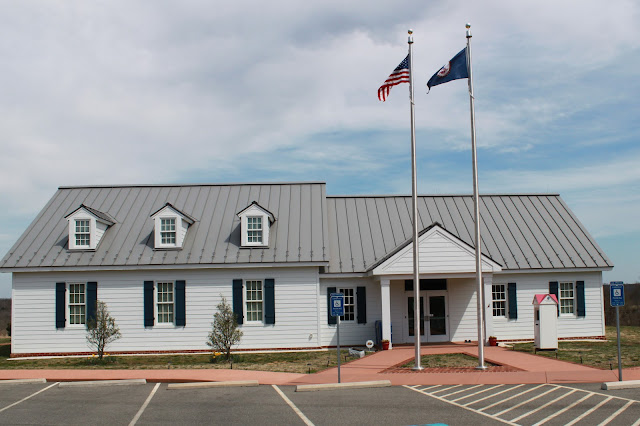
Sailor's Creek Visitors Center

My buddy, Richard Otero and I took a Sunday drive to the Sailor’s Creek Battlefield on April 7, 2013. It was one day past the 148th Anniversary of the battle and a good opportunity to see what the battlefield looked like at the time of year the battle was actually fought.

I had been to Sailor’s Creek a couple times before, one being as a participant at the 130th anniversary reenactment in 1995.

Confederate Troops at the 1995 130th Anniversary Reenactment

The trip took us about two and a half hours from Wendell, N. C. The weather was sunny and pleasant with highs in the mid and upper 60’s. The drive through rural North Carolina and Virginia was pretty. The blue sky was filled with puffy white clouds and roadside fields tended to be that brilliant, early spring green. I thought we would be treated to more flowering shrubs and trees, but this was the first warm day after a winter that hasn’t wanted to quit, so I guess it was still too early.

Map at Sailor's Creek Visitors Center showing Battle lines  

Our first stop was the visitor’s center at Sailors Creek. This is a relatively new building (I think it opened in 2009) and houses a small, well done museum relating to the battle here. A young lady park ranger, on duty, was extremely pleasant and helpful. I explained that I was looking for information about General John B. Gordon’s Corps and Lewis’s brigade, specifically the 6th North Carolina State Troops.  She brought me over to a set of Maps, on display in the exhibit that showed that phase of the battle. These maps are the most detailed I have seen so far, but lacked any detailed narrative to describe the action. She next took me to the tiny gift shop and showed me several books that might provide the narrative. I already own and have read Chris Caulkin’s “The Appomattox Campaign” and I purchased a slim volume of articles by Chris  Caulkin entitled “Thirty-Six Hours before Appomattox” and another book entitled “Black Day of the Army, April 6, 1865. The Battles of Sailors creek”, by Greg Evans. I look forward to reading them to see if they will provide the missing details about Lewis’s brigade. She also made me a photocopy of the maps for my reference.

We spent over an hour time leisurely looking at EVERYTHING in the museum.  I did not notice any artifacts specifically related to the 6th NCST, but there was an impressive collection of arms, and dug relics representing all branches of the service. One exhibit held a grisly fascination over us. It was an enlarged, very clear, photograph of a dead (Confederate?) soldier, lying in a muddy trench. He had been shot through the head and a massive hole was blown out of the top of his forehead. This really makes you realize the horrors or war, Then, as well as now. This guy, whose name is lost to history, is simply a number in a casualty report, but in reality he was a comrade in arms to his fellow soldiers, somebodies son, perhaps a brother, husband and father, that never returned, changing the lives of dozens of people closely associated with him.

Photo on display  at Sailor's Creek Visitors Center 

I asked the ranger if they have a lot of photographs of the battle. As I expected there are not many, but they do have a number of post battle photographs that illustrate what the battlefield looked like shortly after the battle. They are using these to restore the battlefield to its war time appearance, requiring the planting of groves in some areas and the removal of woods in others.

Leaving the visitors center, we turned right, onto the Saylers Creek Road (Va. 617) and proceeded through parts of the battlefield, down to the bridge crossing Sailor’s creek and back up to the high ground where Federal artillery was posted around the Hillman house.

Two Ricks visiting the Hillman House on the Sailor's Creek Battlefield

The Hillman house was used as a hospital during and after the battle.  The owner, Capt. James Hillman, was a captured Confederate officer, imprisoned at Point Lookout or Fort Delaware during this battle. His family was living in the house and retreated to the basement where family lore recalls his wife baking hoecakes for the passing Confederates. Later, when wounded Federal officers where brought into the parlor and the front hall was used as an operating room, blood filled the cracks between the floorboards and leaked through, dripping on the refugees seeking shelter in the basement. The house has been furnished as it may have appeared after the battle when it served as a hospital.

We met Park Ranger R. E. Lee Wilcox who told us about the wounded men who were treated here. About 33 are known to have died here. As we talked about the dead; a wind suddenly shook the open front door and slammed it against its restraints with a loud bang. Gusts whipped around the house. The wind whistling through the closed shutters howled for a few moments then suddenly stopped and all was eerily calm. Richard wondered aloud if the spirits of the dead were making themselves know to us on this anniversary weekend.

Author with 6th North Carolina State Troops Battleflag captured at Sailor's Creek

After touring the house I told Ranger Lee about the Flag ceremony the day before and he seemed interested. I asked him about the position of the 6th NCST at Lockett’s farm. He wasn’t sure of the details but called the owner of the Lockett house, a descendant named Jimmy Garnett. Jimmy invited us to stop by to see him.

Walking back to the parking lot, we noticed a stone wall with a couple of grave stones, peeking over the top, in the middle of the nearby woods. We followed a faint path through the undergrowth and found the late 1850’s graves of some of the Hillman’s children who died as babies.  The location was a small knoll overlooking the Hillman house.  Down the hill, through the woods our attention was drawn by some overgrown cabins or sheds and then we noticed neat depressions in the ground all around us. The depressions all faced east- west and were in evenly spaced rows and columns. We counted dozens of graves marching off in the distance, presumably soldiers from the battle.

Two Ricks visiting the Lockett house on the Sailor's Creek Battlefield

We got in the car and continued down Sayler’s creek road to Holt’s Corners and then turned left onto Jamestown Road, which we followed a mile or so through the rolling farmland until it dead-ended on Lockett’s road. We turned left and were now on the road that the Confederate Wagon train and Gordon’s rear guard used as they approached the swollen Sailor’s creek.  Jimmy Garnett later told us that a slave boy had been dispatched to warn the approaching wagon train that the double bridge across sailor’s creek was flooded and to divert then down another road. But he doubted the accuracy of this story, because the fork would have led to a gristmill that was closer to the Appomattox river and would have also been flooded too. Either way the wagons were trapped. He repeated another story that mules were shot and thrown in the creek to make it fordable for wagons.  He told us that no one is really sure what happened to the wagons, but he personally believed the Yankees looted and burned them. Pointing to his house he said “those aren’t the original shutters, but the ones on the house when I was growing up were supposedly made from wood from the wagons.”

Driving down Lockett’s Road we saw the beautifully restored Lockett House and pulled in to the parking area across from it.  After looking over the signage we gazed on the fields where Lewis’s Brigade was posted, according to the maps.

A pickup truck pulled into the pull off and a man got out and came over to us. He introduced himself as Jimmy Garnett, the owner of Lockett House. He was very friendly and informative. Pointing across the field in front of us to the fringe of trees in the far edge, he informed us that was where sailor’s creek flowed.  To our left was a stand of trees on a knoll. I asked him if that was wooded during the battle and he said it probably was. He told us that Hank Williams, Jr. had gone relic hunting in those woods and found lots of Minnie balls.

I asked him if the road was the same as it was at the time of the battle. The road is basically the same and the berm  on the edge of his lawn above the sunken roadway was formed by wagons passing back and forth throughout the centuries and wearing the road down with ruts.

I asked him what the most unusual thing he found here was. He described the typical things that would be dislodged from the farm fields; Bullets, muskets, bayonets, buttons, “hardly any belt buckles though.” he said.

He thought about it a moment more and then said that years ago a road grader cleaning out ditches near the Hillman house snagged an unknown, buried Federal soldier and dragged him out of the bank. The uniform was faded but you could bend back the collar and see the blue wool. The unfortunate Yankee had a pair of eyeglasses in his breast pocket. The remains were sent to a museum up in West Virginia.

Jimmy told us that they used to have stacks of cannon balls piled on the porch and muskets leaning against the house. His grandmother used to give muskets away to visitors. But during the 1960's centennial, they had so many visitors that his dad took several wagon loads of cannon balls away and buried them in a nearby ravine, because some of them were still live and he was afraid someone would get hurt. Unfortunately Jimmy didn’t give us any muskets or cannon balls.

Speaking of ravines reminded Richard of the disturbing story we heard at the Hillman house. After the battle the Confederates fled. The Federal buried their dead on the field before pursuing them. Following the surrender at Appomattox, the Federals came back for their fallen comrades and took them as they returned north, but the Confederates were left rotting on the battlefield. Meanwhile the Confederate army had disbanded and worn out Confederate soldiers began their long, tiresome journeys to their homes across the south. No one came for the Confederate dead, so the locals gathered their bodies and buried them in a mass grave in a local ravine. Over time the location has been lost.  Richard asked Jimmy if he knew anything about it. “I think I know where the ravine is”, he told us, “at least where I’ve been told it is”,  he replied without giving away the secret.

Minnie Ball Holes Can still be seen on the Lockett house

Pointing to a stand of woods opposite his house, he told us that was where the dead from the Lockett house hospital were buried after the battle. All but one had been retrieved by their families for reburial up North. Lower in the woods overlooking the Appomattox River was a huge four story house that belonged to his ancestors. It is inaccessible, but he plans to restore it sometime in the future.  He had recently restored the Lockett house. When did some rewiring along the front rooms, he found Minnie balls still lodged in the plaster. Bullet holes are clearly visible across the front of the house. Another visitor asked him why the boards have never been replaced.  “Probably because my family was so tight with money”, he replied with a smile. “Those boards are made of heart pine and are so hard; you can hardly drill through them today. There is really no need to replace them for a few holes here and there.”

He invited us to have a closer look and I stuck my finger into several holes at shoulder height, but many more were above my head. General Gordon’s Confederates, across the street, were aiming uphill causing them to shoot high. They must have formed across the road, parallel with the house, rather than along the edge of the road in the field, because the bullet holes seem to be dead on hits, not ragged angular blows.

Not all the deaths came from bullets at the Lockett house. “My grandmother told me that some of the Confederate soldiers were so weak that they died in their sleep, on the lawn, from starvation… she didn’t like to talk about it much because it upset her.”   Jimmy said. The house was used as a hospital after the battle and the lawn was covered in wounded and dying soldiers from both armies. Pointing to the front yard he said” There wasn’t as blade of grass that wasn’t red from blood”.

Pointing to a window on the second floor, he said, that’s where our resident ghost lives. He said that his room is next door and he can often hear the rocking chair in that room starting to rock. One time, his son was staying with him and felt a presence in his room. He said “Mr. Ghost, if you are in this room knock on the mantle.”  The reply was knock, knock, knock.  The ghost is not malevolent, but he is a permanent house guest.

Glancing at my watch I noticed it was half past four. We had talked about dropping by Appomattox on the way home, but it is 45 minutes away so we needed to get going. We bid our farewell to Jimmy and he invited us back to visit him next time we were in town.

We headed down Locketts road past farm fields with that brilliant green of lush vegetation waking up from a long winters nap.  I asked Richard to drive slowly, as I hung my head out the window and imagined ragged butternut and gray North Carolinians retreating through these fields, perhaps making a desperate, final stand against a long line of charging Yankee cavalry.  Where did they fight? I wondered, where did they lose their flag? We may never know, but I intend to continue my research.

The steep muddy banks of Sailors Creek

The road rose to crest a hill, and then started a long gradual decline toward the “double” bridge across the creek, our next stop. To our right, the field gently sloped away from the road to the fringe of trees in the distance, marking the course of the creek.

We pulled over right before the bridge. The creek was perhaps 10-15 feet wide. The current flowed from left to right, toward the Appomattox River, out of our sight, and some unknown distance to our right. The current was rapid but the creek bottom glistened in the late afternoon sun. In spots it was merely inches deep, and even in the deeper water it probably wouldn’t have been past our knees, but neither of us felt like testing this notion. The steep vertical banks told a different story however. At some spots it was, probably, a five or six foot drop to the stream. I imagine that at some time, fairly recently, a raging current cascaded through this ravine cutting the soft Virginia clay into a steep sided, miniature grand canyon.  This would make a great defensive breastwork trench, but if I was running for my life from a cavalry charge, I would not like to stumble into this abyss.

I picked my way down the slippery, crumbling bank to take some photos. I could have easily picked my way across here with little trouble. I thought about marching in formation during civil war reenactments or tacticals. We march shoulder to shoulder, or, sometimes when broken apart by woods, in a looser disorganized line formation, but in either case, there is little opportunity to pick your spot. You get herded to the spot in front of you, and if that is a 6 foot drop…oh well!  This would not be an impassable obstacle to infantry, at least on this day, but if the bridge was out, like Jimmy said, and the creek was overflowing its banks, the ground a mire of mud from troops and horses, it would be tough getting across, especially when being closely pursued by the enemy.

An older, overgrown track  paralleled the modern road bed, leading to a twisted iron bridge almost silted over. It looks like the creek bed had shifted course slightly were the two branches of the sailors creeks merged. Jimmy had mentioned this to us. Next to the pull off lay the rotting carcasses of a field canon carriage, the broken wheels where chained to trees to prevent their removal. I suspect that they date to the centennial or perhaps the 125th anniversary time period, but it would be a shame if this was an original carriage abandoned to rot due to funding cuts.

Part of the Sailors Creek Battlefield

We walked into the long, low, field along the banks of the creek. Looking away from the creek ,the plain in front of us was separated from the sloping hill by a fence line of trees.  Somewhere on this plain the Confederate made a stand, with their backs to the creek, at least according to the maps. I could imagine the familiar site of my reenacted friends in the Carolina Legion stretched out to my left, backs to the creek, ready to resist an enemy charge.

The sun had fallen behind the hill rising up the opposite side of the creek. This is ground that Gordon’s corps climbed late in the day of April 6, 1865 after an afternoon of desperate fighting along sailors creek. We returned to our car and drove up the hill and onward toward Rice’s station and the high bridge. We made a stop at Rice’s Station to read the Lee’s Retreat sign board before heading to the High bridge.  We got off the track, ending up in Farmville. The sun was rapidly making it’s decent and we had more than a two hour drive to get home. We called off the search and decided to come back to the high bridge and Appomattox on another visit.

Richard and I had spent the day walking the ground where the 6th NCST fought 148 years and one day ago. I now have a better feel for the terrain they fought on, although I would like a better narrative describing the events of that part of the battle. At least one account of the battle described the Federal soldiers admiring the brilliant red sunset that evening, only to learn later that it was the glare from the burning wagons that was illuminating the twilight.

As we headed home, the sun was starting to fall, casting long sgadows of the spring green farm fileds and wood lots whizzing by. The western vista suddenly opened up and the sun was an enormous red ball balancing on the horizon. Looking closely at the beautiful end of this day’s adventure, I  thought once again about the soldiers. There were no wagons burning tonight, just the memory of a great battle that was fought here.


Confederate battle flag of 'Bloody 6th' regiment conserved for future generations


Members of the Sixth North Carolina State Troops proudly display the authentic Battle flag they worked so hard to raise over $6,000 to conserve in honor of the men of North Carolina who fought under this banner

Published: April 7, 2013 in the Raleigh News and Observer (section B, page 1)

"Bloody 6th" Battle Flag at Home

N. C. Regiment lost it in Virginia; Museum brings it home to Raleigh

By Renee Elder — relder@newsobserver.com

RALEIGH — A Confederate battle flag lost in the final months of the Civil War was handed over again Saturday – this time back into the collection of the N.C. Museum of History following a $6,500 restoration.

The flag was carried by the 6th Regiment of North Carolina [State Troops] at the Battle of Sailor’s Creek in Virginia when it was captured by a Union soldier on April 6, 1865. Forty years later, the federal government returned the flag to North Carolina, but it remained hidden in storage because the torn and dirty fabric was not suitable for display, said Jackson Marshall, assistant director of programming at the history museum.

“It’s been 100 years since the public has seen this flag,” Marshall said. “Now it’s cleaned and conserved in a way that will protect it for another 40 or 50 years.”

The museum is short on funds for restoring historic artifacts and must depend on private groups such as the Cedar Fork Rifles Preservation Society[1], which raised money to restore the 6th [North Carolina State Troops] Regiment flag, he added. The museum has about 125 battle flags but only about 30 have been cleaned and preserved so they can be made available for display.

More than 100 people from across the state came to the dedication Saturday to see the flag and share stories about the N.C. 6th Regiment, which formed in Charlotte [Company Shops, N. C., present day Burlington, N. C. ] in May 1861 and fought its first major battle two months later in Manassas, Va., also known as the First Battle of Bull Run.

“It was the only North Carolina battalion [to fight] at that first great battle of the war,” said Rick Walton, a Civil War historian and member the Cedar Fork Rifles Preservation Society. [2]

Known as “the bloody 6th,” the regiment fought constantly during the war and at many famous battle sites in throughout Virginia, Pennsylvania and North Carolina: Yorktown, Sharpsburg, Fredericksburg, Chancellorsville, Gettysburg, New Bern, Plymouth, Petersburg and others. Starting out with 1,000 members, the ranks were diminished by injuries and deaths after years of fighting. Replacements were brought in whenever possible, Marshall said.

Sailor’s Creek, about 60 miles southwest of Richmond, was the last battle fought by the 6th Regiment, which carried a practically new flag that had been issued to replace others lost or captured in battle.

“We don’t know who the 6th’s flag-bearer was that day; in fact we know more about who captured it,” Walton said.

Joseph Kimball, of Littleton, N.H., got credit for taking the 6th Regiment battle flag; he was awarded one of the 57 medals handed out by the Union Army for military service on that day.

The Confederate battle flag has 13 five-pointed stars set on an “X” pattern, known as St. Andrew’s Cross but also sometimes called a Southern Cross. It is distinct from the Stars and Bars design of the Confederate States of America flag.

Sailors Creek Battle Flag before Conservation

This 6th Regiment’s battle flag is missing a star, which was cut rather than ripped from the fabric, indicating it was likely taken as a souvenir from the battlefield or after the war, Marshall said. Conservators who prepared the flag for exhibit cleaned and protected the delicate fabric but did not change the flag’s overall appearance.

The Confederate Army lost more than 7,700 men at Sailor’s Creek. Just 72 hours later, General Robert E. Lee surrendered at Appomattox Court House.

More than just a symbol of a long-ago military conflict, the flag represents family history for many of those who came to see the flag rejoin the museum’s collection, Walton added.

“What this represents to us is heritage,” he said. “It’s a visual reminder of our ancestors.”

Marshall said North Carolina troops suffered massive losses in the Civil War -- as many as 35,000 men were killed and thousands more severely wounded.

“In Gettysburg, almost 25 percent of the total losses were North Carolinians killed or wounded,” Marshall said.

He said North Carolina’s Civil War heritage remains strong largely because of the losses so many families endured.

“I’m astounded at how many people give money to these efforts because they know they have a family connection,” he said. “People still remember the suffering and loss and want to keep family memories alive.”

NOTES

1.  The Cedar Fork Rifles Preservation Society is the formal name of the living history organization that incorporates the Sixth North Carolina State Troops reenacting group.

2 Two other North Carolina units were present at Manassas but not actually engaged. The 11th Volunteers/21st NCT were  stationed one mile northwest of Mitchell’s Ford on Bull Run, but were not engaged in the battle. The 5th North Carolina State Troops were stationed  at Blackburn’s Ford on Bull Run. The regiment was not engaged but was under artillery fire.

Lt. Walton’s Keynote address for the dedication of the conserved 6th NCST Battle flag

 Copyright (C) 2013 By Frederick Walton, Historian of the 6th North Carolina State Troops

On Saturday April 6, 2013, the anniversary of the battle of Sailors creek, I presented the following program at the North Carolina Museum of History as the keynote speaker to dedicate a newly conserved battle flag that was captured at Sailor’s creek 148 years ago,

Author presenting the keynote address at the North Carolin Museum of History on April 6, 2013

An Address for the Dedication of a Newly Conserved Battle Flag 

The Confederate Battle Flag…   

That familiar flag…. 

With a bright red field….,

Crossed by the blue bars of the saint Andrews Cross….

Five pointed white stars represent the states of the Confederacy...

We all recognize this flag. It is the thing that brought us together today.

It is a flag that proudly symbolized the unity of Southern communities in the 1860’s, who were sending husbands and brothers and son’s off to fight for their vision of a new government… one that more closely represented their Anglo-Saxon and Scots-Irish agrarian, political and religious beliefs.

Sadly, it is a flag that divided many of these same communities a century later and still causes much confusion about cultural and racial identity today. 

I’m not talking about the “Stars and Bars” or the “Bonnie Blue”. These are distinctive flags with their own story and pride of place, but people sometimes mistakenly apply their name to this flag. 

I know YOU wouldn’t make that mistake….you KNOW that this is the Confederate battle flag.  Sometimes it is called the Southern cross.

It is the soldier’s flag.  A flag that was carried into battle by each and every Confederate regiment.  

It marked their place on the battle field. It led them into battle and acted as a rallying point in the swirling noise and confusion of many a desperate and deadly fight.

We’re here today to pay honor and tribute….not to a battle flag that has simply endured for a century and a half…but for what it represents …to US!… Heritage!     Honor!       Devotion! 

We gather here today to honor the memory of those men of the 6th regiment North Carolina State Troops … our ancestors… that carried this flag…. That fought under this flag…That died for this flag. 

We are here because of the hard work of our members and the financial support of our friends and descendants who contributed to this project.   Thank you for your support. And Thank you for supporting future projects.    We take great pride in our sacrifices of time and money that have made this project so successful. But let us never forget the men we do it for … our ancestors, .. Some who made the ultimate sacrifice. 

And Thank you to the North Carolina Museum of History for Partnering with us on this project and sponsoring today’s event. We look forward to a long relationship with the great folks here who have taken pride in our heritage. 

Together, we have ALL preserved this flag as a visual reminder of our ancestors so that future generations may be reminded of them and learn of their sacrifices. 

When the state of North Carolina called upon them to come forward … They willingly volunteered. Many never came home. Today this chapter of North Carolina history is considered by many to be politically incorrect. They would rather we forget it.   But luckily, I’m a historian…not a politician!  So let me tell you a little bit about the 6th North Carolina and  the history of the flag we’re about to unveil. 


The 6th North Carolina State Troops earned the nickname “Bloody Sixth” through hard fighting on many battlefields throughout the war.  I could easily spend the next several hours sharing with you their remarkable history.  But for the sake of brevity let me read to you from the colorful and descriptive summary written by their unit historian, Captain Neill W. Ray at the turn of the century.    

 I Quote …

“Theirs was not garrison or post duty …it was their lot to fight the enemy in the field …to meet him in his advances….to check him when possible and to follow him back and fight him in his own country and in his own strongholds …to contest

inch by inch…

day after day …

week after week

month after month

the enemy’s investment and gradual closing in on the lines around Petersburg and Richmond and when numbers prevailed over the thinned and thinning lines of the Army of Northern Virginia to fall back and back with them until finally hemmed in and compelled to surrender”

Captain Neill Ray

Captain Ray was justifiably proud of the Regiment he served in. They mustered into service on May 16, 1861. This was six months before the confederate battle flag was first issued in November of 1861. He wrote, and I quote:

 “At the first call her men volunteered for the War and hastened to the Northern border of Virginia to meet the enemy at the forefront 

From July 1861 to the closing scene at Appomattox they shared the fortunes of the Army of Northern Virginia

Their blood … wet the soil of Manassas Plains on July 21st 1861”  

Regimental flag of the 6th North Carolina State Troops

They were the ONLY North Carolinian’s to fight in this first great battle, But BEFORE the  6th North Carolina even left for  Virginia, Colonel  Fishers sister presented them with a regimental flag made using her own blue silk Shawl. It survived the war and is on display HERE in the museum.  

Written on the flag is the regiment’s motto…”DEEDS NOT WORDS”.  Throughout the war they embodied this motto by their gallant deeds.

Deeds Not Words-Regimental flag of the 6th North Carolina State Troops


Captain Ray’s history details all the places they fought which I will summarize for you:

In 1862 they held back invading Federals during the Peninsular Campaign Fighting at

  • Yorktown
  • Eltham’s Landing,
  • Seven Pines and Fair Oaks  
Next came the seven days battles

  • Gaines Mill ,
  • Savage Station ,
  • White Oak Swamp
  • Malvern Hill ,
  • Harrison’s Landing

 Then they were drawn back to northern Virginia to fight at 2nd Manassas and Sharpsburg, a battle that became infamous as the bloodiest single day of the war. They ended the year defending Fredericksburg in December 1862. 

Colonel Isaac Erwin Avery

In 1863 they fought again in Fredericksburg as part of the  Chancellorsville campaign.   Then on to Gettysburg  Where Colonel Isaac Erwin Avery, commanding the Brigade, fell in the attack on East cemetery Hill…  writing his last words

“Tell my Father I died with my face to the enemy”

Colonel Avery's Note. Held in the Vault at the N. C. State Archives
 

  In November, Hoke’s brigade was overrun at Rappahannock Station and many members of the 6th were killed, wounded or captured.   Returning to North Carolina in the spring of 1864 they fought at:

  •  Bachelor’s Creek near New Bern, 
  • Plymouth
  • and little Washington,

before being rushed back to the Virginia theater of war for a busy summer of campaigning.

  • Petersburg
  • Cold Harbor

and then to the Valley under Jubal Early:

  • Lynchburg,
  • Martinsburg,
  • Monocacy,

all the way to the gates of  Washington D. C. where their very presence caused quite a stir!   But the long hard march prevented them from entering the heavily fortified Capitol so they returned to the Valley fighting at:

  • Winchester
  • Fisher’s Hill
  • and Cedar Creek

January 1865 found the hardened veterans in the frozen trenches of Petersburg. On March 25th 1865 they stormed Fort Steadman in a desperate gamble which Ray called a “forlorn hope”. 


He concludes by saying, Quote:

“Three times they went into the enemy’s territory in Maryland and Pennsylvania, fording the Potomac six times “  


Interestingly enough, the one place he forgets to mention is Sailors creek! The final battle for the 6th NC and the battle where their flag was lost. So let me tell you a little bit about the flag and how it was captured.

After the 1864 Valley Campaign, the Richmond Depot produced a 6th issue bunting battle flag to be distributed to regiments who lost flags in the Valley or needed replacements. The flag we are unveiling today was issued to the 6th North Carolina State troops after their long and tiresome campaign in the Valley.

The flag is approximately 4 feet square.  Notice, I said square. Not a rectangle.  Battle flags flown by the Army of Northern Virginia were square.   Our flag measures 45 1/8 inches at the”hoist” (or width) by 48 inches in length, which is called the “fly”.  

"Sailors Creek" flag at N. C. Museum of History, before conservation

The blue bars that forms the St. Andrews cross are 5 ¼ inches wide and are edged with a ½ inch white fimbriation.  There are thirteen, white, 4 ½ inch, five pointed stars are evenly spaced every 8 inches.   The flag is edged with 2 ¼ inch white bunting on three sides, while the hoist edge is strengthened with 2 ½ inch wide white canvas that contains three hand stitched eyelets to tie the flag to a pole.   

"Sailors Creek" flag at N. C. Museum of History, before conservation

This flag contains no battle honors and no unit identification, however on the reverse is the number “357” stenciled there by the U. S. War Department when it was cataloged after being captured. This unique serial number  can be used to trace the provenance of an individual flag, especially an unmarked flag like this one.

At the Battle of Sailor’s Creek, The 6th North Carolina was a member of Lewis’s brigade along with the 21st, the 54th and the 57th North Carolina Troops. As part of Major General John B. Gordon’ second army corps, they were struggling along as the Army’s rear guard  on April 6, 1865. 

In his “Reminiscences of the Civil War “ General Gordon paints a picture of the hardship they faced:   Quote

“Fighting all day, marching all night, with exhaustion and hunger claiming their victims at every mile of the march, with charges of infantry in rear and of cavalry on the flanks, it seemed the war god had turned loose all his furies to revel in the havoc. 

  On and on, hour after hour, from hilltop to hilltop, the lines were alternately fighting and retreating, making one almost continuous shifting battle “

Around 11 AM Sheridan’s cavalry swooped down on the Gordon’s men , driving them back.   Nearby at the upper fords, both General Anderson and General Ewell were trapped and forced to surrender.    But at the lower ford, near Lockett Farm, the  North Carolinian’s of Lewis’s brigade bitterly resisted, pushing their attackers back. The action seesawed back and forth on the muddy, narrow road. With their backs to the swiftly flowing Sailors creek, the embattled Confederates fought for their very lives.

No narrative exists to describe the action that happened next…at the moment the 6th North Carolina’s flag was captured.   Ironically we know more about who captured this flag, than we know about who in the 6th North Carolina State Troops carried it.

We don’t know who the flag bearer was or what fate befell him,   But It was a  29 year old Yankee cavalryman named Private Joseph Kimble who galloped away from the battle line with a prized confederate Battle flag that day, earning him a medal of honor.

Kimbell, was born in Littleton, New Hampshire. He enlisted in Ironton, Ohio and was a member of, Company B, 2d West Virginia cavalry.

Sixty Medals of Honor were awarded for actions at Sailor’s Creek, Virginia, during the period March 29 to April 6, 1865.   Fifty-seven awards were presented for actions on April 6 alone…all but ten  of them for the capture of Confederate battle flags.  

As  Grant’s Federal troops scattered the Confederate army across the battlefield, General Lee looked down on the scene from a nearby hilltop and remarked 

“My god, has the Army dissolved?” 

 The catastrophic loss of nearly 8,000 men, 8 generals, Cannons, supplies and …battle flags, spelled the end for the Army of Northern Virginia. 3 days later, on April 9th, 1865 …it was over.

The men of the 6th North Carolina returned to their homes and rebuilt their shattered lives after the war, many rising to prominence in State and local government or successful business or farming careers.    Many of you descended from these brave men and probably have your own interesting war stories to tell about your ancestor. I would love to hear them some time.

And so we gather today to dedicate a battle flag carried by the men of the 6th North Carolina State troops, captured from them as they fought honorably in a furious battle, returned to North Carolina by the united states government in 1905 and Preserved…by Us in 2012.   It will once again be a witness to the Story of the 6th North Carolina state troops.

At this time I would like to invite forward two descendants. I am proud to call them my friends and my partners in this project. As, Reenactors We have stood shoulder to Shoulder on many of the battlefields their ancestors fought on.   To unveil the flag, please welcome Corporal Matt Holder, Great-Great  grandnephew of Private Lemuel Holder, from Co. I, who was captured after the Battle of Gettysburg and perished in Point lookout Prison.

Descendants Matt Holder and William O'Quinn unveil the conserved flag

And Corporal William O’Quinnm, the great-Great grandson of Corporal Thomas C. Barbee who was wounded at the battle of Gaines mill and served honorably in Co. I through the war until paroled at Appomattox.

Both Ancestors served in Co. I, which is the company our reenactment unit proudly  portrays.   

(wait for William and Matt to come on stage)

Will the Audience please stand.

(to members of the 6th North Carolina State Troops) 

Attention Company….. Present Arms…..

We proudly dedicate this conserved flag to the descendants of the veterans of the 6th North Carolina state troops and to the people of the old North State   

(Flag is unveiled)  

 Three Cheers for the Old North State….   

(Musicians come on Stage)   

THANK YOU   

(Return Podium to MC)

Author standing next to the Conserved Flag on the stage at the North Carolina Museum of History


Selected Bibliography

Clark, Walter, editor. Histories of the Several Regiments and Battalions from North Carolina in the Great War, 1861-65. 5 vols. Raleigh and Goldsboro: E. M. Uzell, 1901.

Iobst, Richard W. The Bloody Sixth: The Sixth North Carolina Regiment, Confederate States of America.Raleigh, NC: NC Confed Centennial Comm, 1965. 493 p. E573.5.6th.I6.

Dedmondt, Glenn. The Flags of Civil War North Carolina. Gretna, La.; Pelican Publishing Co. , Inc, 2003. 206 p.

Rollins, Richard M.  The returned battle flags. Redondo Beach, Calif. : Rank and File Publications, 1995.

Cannon, Jr., Devereaux D. The Flags of the Confederacy: An Illustrated History: St Lukes Press and Broadfoot Publishing,1988.

Calkins, Chris, The Appomattox campaign : March 29-April 9, 1865 Conshohocken, PA : Combined Books, 1997.  


Regimental Commanders of the "Bloody Sixth"

  1st: Colonel Charles F. Fisher May 16, 1861-July 21, 1861 Killed in action at the Battle of First Manassas 2nd: Colonel William Dorsey Pen...